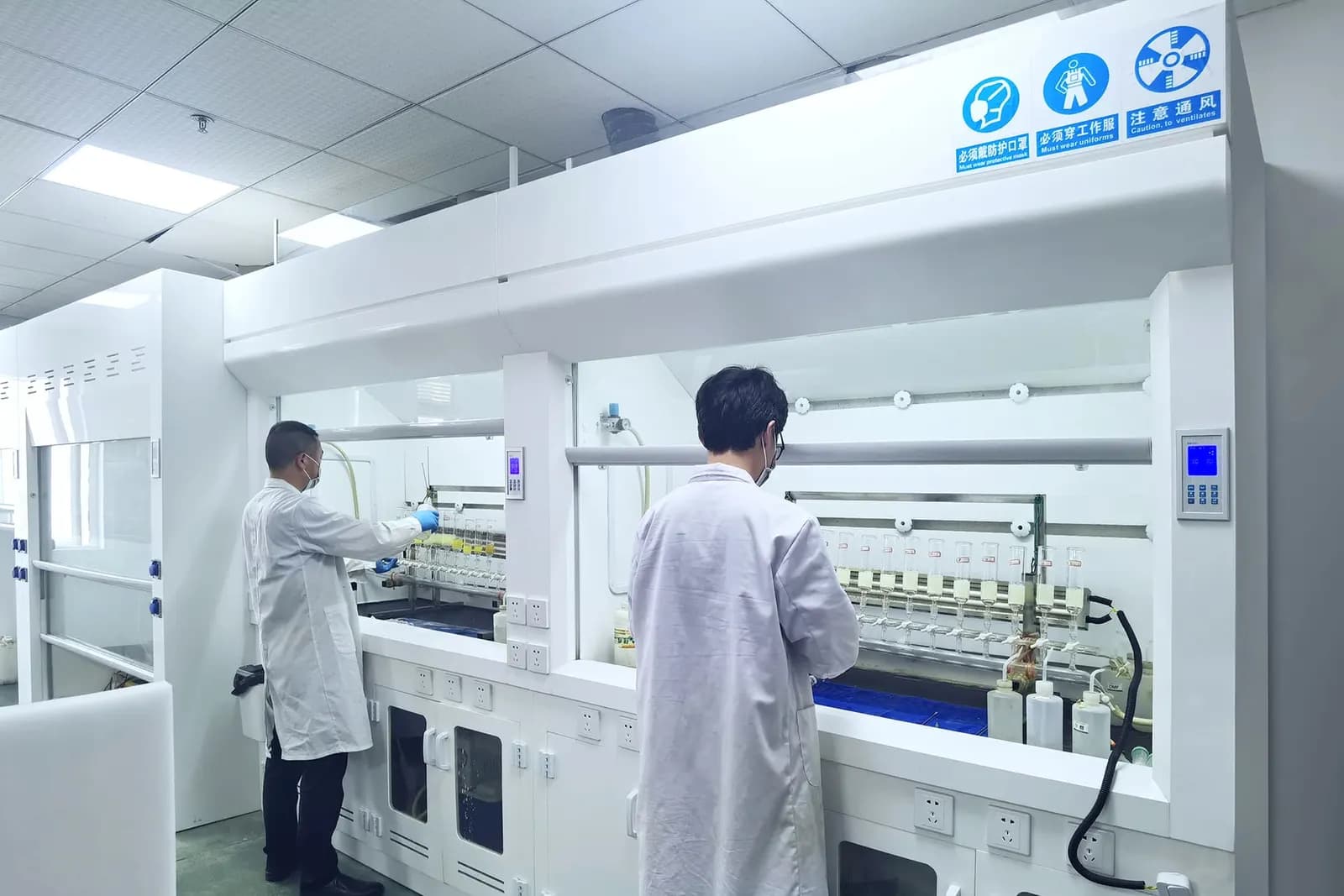
Peptide quality control at ChinaPeptides is built around two questions a research laboratory asks of every lot: is the main species the requested sequence, and what fraction of the UV-active material is that species? We answer those questions with HPLC and mass spectrometry. Extra assays are added only when the project specifies them.
This page describes the analytical path used with custom peptide synthesis. It is not a claim that every optional test is run on every vial.
Peptide quality control process
After purification, a representative sample of the lyophilized lot is examined by reversed-phase HPLC. The same lot is analyzed by mass spectrometry or LC-MS to confirm molecular weight. The chromatogram and the mass result are the core of the certificate. If the HPLC profile is unexpected, synthesis review happens before the lot is released.
HPLC analysis
HPLC reports an area-percent purity under defined wavelength, column and gradient conditions. Those conditions belong with the number; a 95% figure without a method is not comparable between laboratories. Hydrophobic and labeled peptides can require a shallower gradient or a different detection wavelength. Practical notes are in HPLC analysis for peptide purity and how to choose peptide purity.
LC-MS and mass spectrometry
Mass spectrometry verifies that the main peak has the expected molecular weight, including the requested modifications. LC-MS is used when the chromatogram contains closely eluting species that need assignment. See LC-MS in peptide characterization.
What is routine vs available upon request
Routine for typical custom lots: HPLC purity analysis; mass-spectrometric or LC-MS molecular-weight verification; lyophilized appearance as supplied; storage recommendation.
Available upon request when specified for the research project: amino-acid analysis; peptide content; solubility comments in a named solvent; additional documentation copies. We do not advertise residual-solvent, endotoxin, microbial or heavy-metal panels as standard peptide-release tests. If a protocol requires one of those, ask before the synthesis starts so we can say whether it can be arranged.
Amino-acid analysis, when requested, reports residue composition. It is a useful check on sequence identity for some lots and a poor substitute for MS when a modification is the question. Peptide content, when requested, estimates how much of the weighable solid is peptide rather than water or counter-ion. Water content and counter-ion analysis are not implied by HPLC percent. Residual solvents, endotoxin, microbial testing and heavy metals are not routine peptide-release tests on this site. Listing them here would invent a capability we do not treat as standard.
Solubility is sequence-dependent. A certificate may include a comment when a named solvent was tested for that lot. It will not invent a universal stock recipe. Practical handling notes are in the solubility guide and storage guide.
Example analytical workflow
Sequence evaluation → synthesis → purification → HPLC → LC-MS → lyophilization → final QC review → certificate of analysis. Skipping HPLC or MS to save time is not part of the standard custom path.
How to read the resulting document is covered in how to read a peptide CoA. Independent confirmation—when a protocol needs a second laboratory—is described in independent peptide analytical testing and can be arranged with our laboratory partner Qorix.
Frequently asked questions
What is included in a standard peptide CoA?
Lot identity, sequence as submitted, HPLC purity of the released fraction, and mass-spectrometric confirmation of molecular weight. Additional tests are listed only when they were performed.
Is HPLC purity the same as peptide content?
No. HPLC purity describes the area percent of the main peak among UV-active species. Peptide content (the weight fraction that is peptide rather than water or counter-ion) is a different measurement and is not implied by HPLC percent.
Do you always run amino-acid analysis?
Amino-acid analysis is arranged when it is specified for the research project. It is not treated as an automatic test on every milligram lot.
Can you test endotoxin or residual solvents?
Those tests are discussed only when a research protocol requires them. They are not listed here as routine release assays.
How do I compare two lots?
Send both HPLC methods and the historical chromatogram. Overlaying methods that use different columns or gradients is not a valid purity comparison.
Where can I learn to read the certificate?
See the article on how to read a peptide certificate of analysis, and the HPLC and LC-MS technical notes.