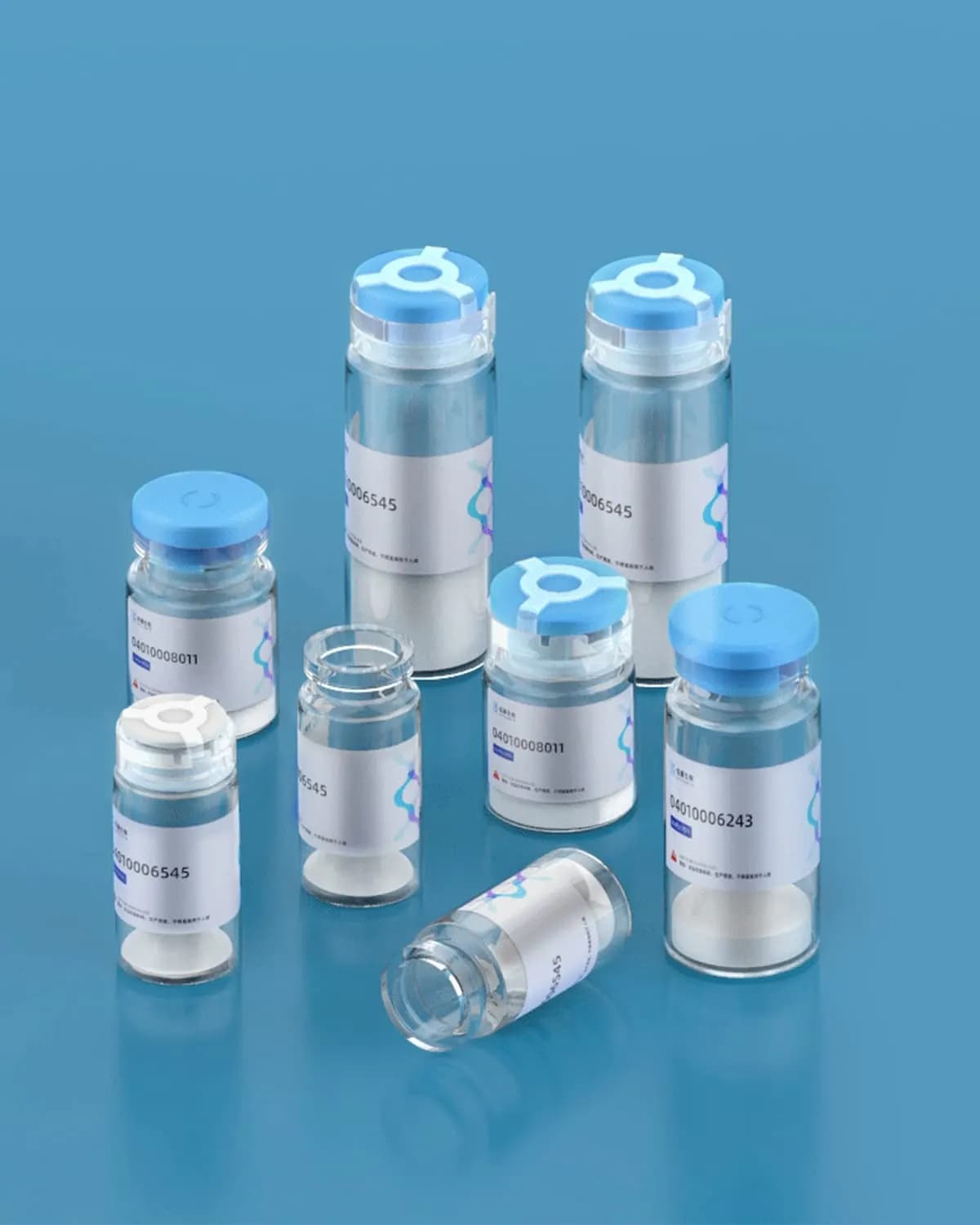
ChinaPeptides provides custom peptide synthesis for biotechnology companies, pharmaceutical discovery groups, universities and contract research organizations. Each sequence is reviewed for coupling difficulty, solubility and analytical strategy before a research quotation is issued.
The service is a peptide manufacturing workflow, not a retail catalog checkout. You send a sequence package; our chemists propose purity, scale and documentation appropriate to the experiment. Materials are supplied for laboratory research only.
What is custom peptide synthesis?
Custom peptide synthesis is the chemical assembly of a defined amino-acid sequence to a requested length, terminus and modification set. Most research peptides are prepared by solid-phase peptide synthesis (SPPS), then cleaved, purified and lyophilized. The value of a custom service is not only chain assembly: it is the combination of route selection, impurity control and an analytical package that a laboratory can file with the experiment.
A typical request specifies the one-letter sequence, N-terminal state (free amine or acetyl), C-terminal state (acid or amide), disulfide pairing if any, labels or lipids, HPLC purity, quantity and the assay in which the peptide will be used. Those details change resin choice, coupling reagents and the purification gradient.
Our custom peptide synthesis capabilities
The platform covers standard linear peptides and a wide set of research formats. Related service pages describe each format in more detail; the list below is the synthesis scope we evaluate on a project basis.
- Standard peptide synthesis — linear sequences with defined termini, suitable for most biochemical and immunoassay work.
- Long peptide synthesis — aggregation-prone or extended chains, including projects discussed on the long peptides page.
- Difficult peptide synthesis — hydrophobic stretches, multiple cysteines, aspartimide-prone motifs or sterically hindered residues that need cycle optimization.
- Cyclic peptide synthesis — disulfide, head-to-tail and selected lactam cycles; see cyclic peptides.
- Modified peptides — biotin, PEG, phosphate, dyes, lipids and conjugation handles via peptide modification.
- Peptide libraries — overlapping and scanning sets described under peptide libraries.
- Antigenic peptides — epitope peptides and carrier-ready antigens for antibody programs.
- Fluorescent peptides and FRET substrates — labeled tools on the fluorescent peptides page.
- Glycopeptides and lipopeptides — glycosylated or lipidated sequences when the chemistry is specified.
- Stapled peptides — hydrocarbon-braced helices; see stapled peptides.
- Unnatural amino acid peptides — selected non-canonical residues after a feasibility review.
Synthesis scale
Scale is chosen from the amount needed for the experiment plus a reserve for repeats, not from a retail pack size. Discovery assays often use milligrams. Method development and multi-site studies move into grams. Established research sequences can be produced at multi-gram or kilogram research scale when the purification train is already known.
Larger batches do not change the research-use restriction. They do change how we lock the HPLC method and how we document lot-to-lot comparison.
Purity options
HPLC purity is a project specification, not a single house grade. Crude or desalted material can be appropriate for preliminary screens. Immunization, quantitative binding assays and publication figures usually require ≥90% or ≥95%. ≥98% is requested when the impurity profile itself is part of the study. We will say so if a sequence is unlikely to reach a requested grade without a change in route or a reduction in yield.
Typical HPLC grades discussed on a quote: crude, desalted, ≥70%, ≥80%, ≥90%, ≥95% and ≥98%. The grade is an area-percent target under an agreed method, not a peptide-content number and not a sterility claim. If two laboratories will compare lots, send the historical method with the inquiry so the gradient and wavelength can be aligned rather than argued after delivery.
Catalog versus a custom lot
Use the catalog when the classical published sequence is listed and the listed purity is enough. Use custom synthesis when the termini, labels, cyclization, fragment length or HPLC grade are not stocked. A catalog name is not a license to assume amidation or a salt form; read the product page. A custom lot is not a faster catalog SKU—it is a project with a written sequence and a certificate for that lot.
What a quotation actually decides
A useful quote names the sequence, termini, modifications, HPLC grade, quantity and the intended assay. Those items decide resin, coupling cycles, purification load and whether a fragment or cyclization step is in scope. A quote that only says “peptide synthesis company, 5 mg, high purity” is not enough to manufacture against. We would rather ask one clarifying question than invent a default that fails in your buffer.
Research peptide manufacturing services on this site remain research-use only. They are not a clinical supply line and they are not a consumer supplement shop.
Peptide synthesis process
- Sequence evaluation — length, motifs, modifications and analytical targets.
- SPPS — stepwise chain assembly on resin with monitored couplings.
- Cleavage and deprotection — release of the crude peptide.
- Purification — typically reversed-phase HPLC to the agreed grade.
- HPLC — purity chromatogram for the released lot.
- LC-MS — molecular-weight confirmation of the main species.
- Lyophilization — dry peptide for storage and shipment.
- Documentation — certificate package appropriate to the requested grade.
Quality-control methods and the certificate contents are described on the quality control page. We do not list instrument models or extra assays that are not part of a given project.
Quality control
Routine release uses HPLC purity and mass-spectrometric identity. Amino-acid analysis and solubility comments are arranged when they help the research use. A certificate of analysis accompanies the lot. If you need a method comparison with a previous supplier lot, send the historical chromatogram with the inquiry.
Related technical reading
For planning notes before you request synthesis, see the custom peptide synthesis guide, how SPPS works, how to choose peptide purity and difficult-sequence troubleshooting.
How to request a quote
Open request a quote and attach the sequence file, or email the same package to our contact address. Include purity, quantity and modifications in the first message so the evaluation does not bounce between incomplete drafts.
Long peptide synthesis
Extended sequences with aggregation-aware coupling and fragment options.
Cyclic peptide synthesis
Disulfide, lactam and head-to-tail cycles confirmed by mass spectrometry.
Fluorescent peptides
FITC, TAMRA, Cy dyes and FRET pairs for assay and imaging work.
Peptide libraries
Overlapping, alanine-scan and positional libraries for mapping studies.
Stapled peptides
Hydrocarbon staples placed to stabilize helical research tools.
Peptide modification
Biotin, PEG, phospho, lipid and conjugation chemistry planned with synthesis.
Frequently asked questions
What information do you need to quote a custom peptide?
The amino-acid sequence, desired quantity, HPLC purity, N- and C-terminal form, any modification, and the intended research use. Salt form and aliquot size are helpful but not required for a first evaluation.
What purity grades are available?
Crude, desalted, ≥70%, ≥80%, ≥90%, ≥95% and ≥98% by HPLC are typical options. The grade that is practical depends on sequence length, hydrophobicity and the number of modifications.
How long can a custom peptide be?
Standard solid-phase synthesis is routine below ~40 residues. Longer sequences, including projects approaching 150 amino acids, use specialized coupling cycles or fragment strategies. See our long peptide page for the constraints.
Are catalog and custom peptides for human use?
No. All peptides and related services on this website are supplied for scientific research only and are not intended for direct human use.
What analytical data is included?
HPLC chromatograms and mass-spectrometric molecular-weight confirmation are standard. Amino-acid analysis, solubility notes and additional tests can be discussed for a specific research project.
Can you synthesize cyclic, fluorescent or stapled peptides?
Yes. Cyclization, fluorophore labeling, FRET pairs, glyco- and lipopeptides, libraries, staples and selected unnatural amino acids are part of the custom platform.
What scale can you manufacture?
Projects typically start in the milligram range for discovery work and can move to multi-gram or kilogram research batches when the sequence and purification route are established.
How do I start a project?
Use the request-a-quote form or email the sequence package. A chemist reviews coupling risk, purification strategy and documentation before we confirm a timeline.