By ChinaPeptides Technical Team · Published August 30, 2026 · 6 min read
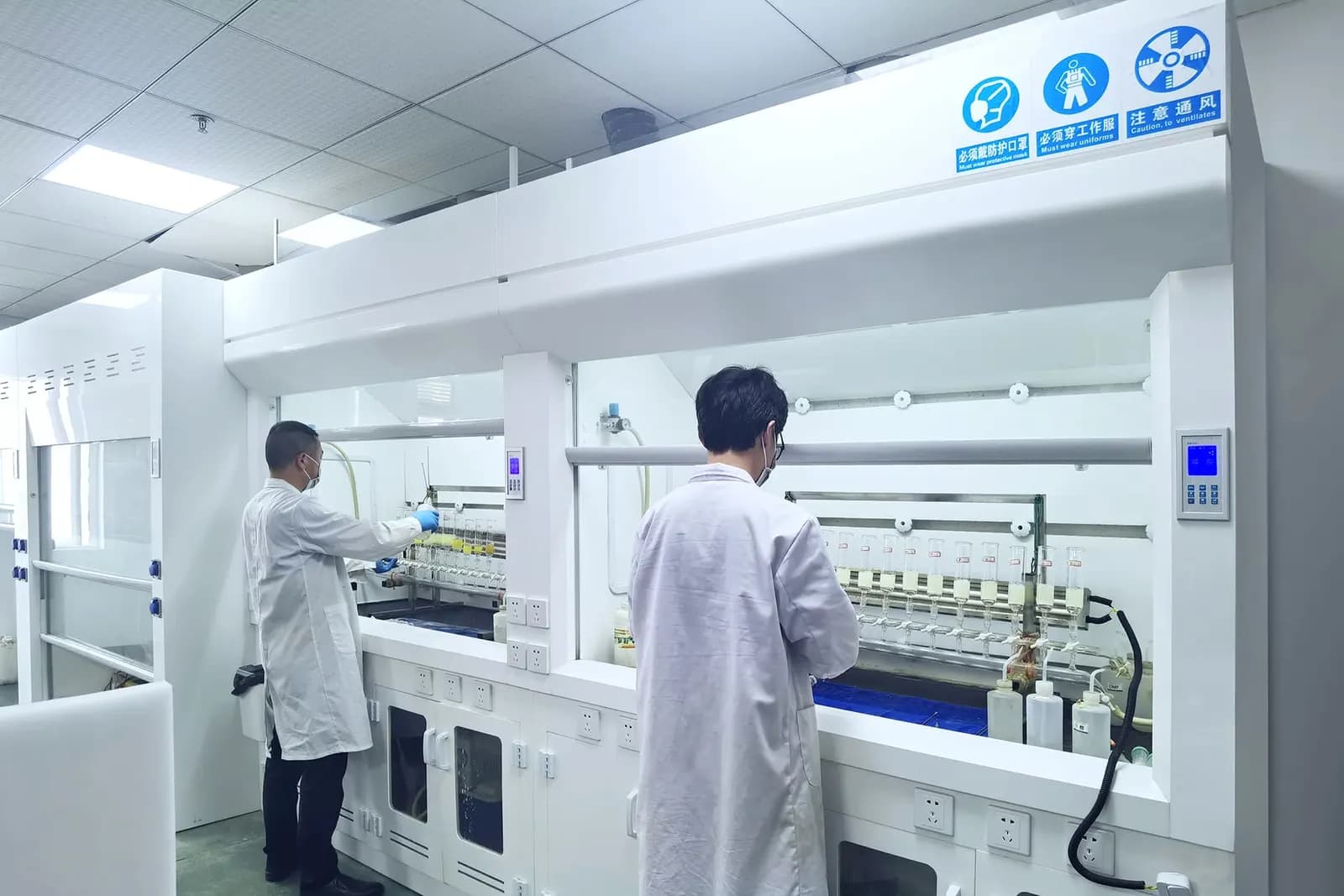
A research peptide usually arrives with a manufacturer certificate: HPLC purity and a mass that matches the requested sequence. That package is the lot’s identity as the synthesizer released it. It is not, by itself, an independent measurement. Laboratories that need a second data set send a portion of the same solid to an analytical laboratory that did not make the peptide.
ChinaPeptides describes in-house release on the peptide quality control page. This article is about the complementary path: third-party testing. Our laboratory cooperation partner for this work is Qorix (Qorix Labs (Tianjin) Testing Technology Co., Ltd.), a Tianjin analytical laboratory that publishes LC-MS, NMR, MALDI-TOF and peptide-analysis offerings. The cooperation does not make Qorix a ChinaPeptides factory, and it does not make a Qorix report a substitute for reading the manufacturer method.
What “independent” actually means
Independence is a chain-of-custody statement, not a moral upgrade. The second laboratory receives a vial you send, runs a method it documents, and reports what that instrument saw. It does not know whether the rest of the bottle matches the aliquot unless you sampled fairly. It does not certify that the peptide is safe for any use. Research-use restrictions still apply.
A manufacturer CoA answers: “What did we release?” An independent report answers: “What did this aliquot look like on our method?” Those sentences can agree and still differ in area percent, because HPLC methods are not universal. Wavelength, column, gradient and integration rules move the number. The HPLC analysis guide and purity selection note explain why two honest 95% figures can disagree.
When a second laboratory is worth the aliquot
Typical research reasons, not a shopping list:
- A purchasing or QA procedure requires a test that the synthesizer does not run as routine release.
- Two manufacturer lots will be compared and you want one method applied to both aliquots.
- The sequence is modified (dye, lipid, PEG, staple) and the manufacturer HPLC is hard to interpret; a second MS or NMR data set can assign the main species.
- A previous supplier chromatogram exists and you want a lab that will run a close method, not only “a 95%.”
A second lab is a poor use of material when the question is only “is this the catalog name on the label?” The sequence, CAS and manufacturer CoA already speak to that. Independent testing does not turn a research peptide into a medicine.
What Qorix publishes as its testing scope
Qorix’s public pages describe an analytical laboratory in Tianjin. The stated instrument families are LC-MS, NMR and MALDI-TOF, with peptide analysis (identification, sequencing and purity) and broader chemical / pharmaceutical / materials work including HPLC/MS, GC-MS, HRMS and MALDI-TOF/Q-TOF. We do not invent ISO numbers, headcount or unnamed instrument models for that laboratory. Capabilities beyond those pages should be confirmed on Qorix offerings or a written quote from Qorix, not assumed from this article.
For a peptide project, the useful conversation is usually: HPLC or LC-MS for purity and mass; MALDI-TOF when a large or poorly ionizing species needs a soft ionization MW; NMR when the question is structure or residual solvent/counter-ion context rather than a UV area percent. The companion article LC-MS, NMR and MALDI-TOF for peptide characterization maps those questions.
How this sits next to ChinaPeptides release testing
Routine custom lots from ChinaPeptides include HPLC purity and mass-spectrometric identity. That is manufacturing QC. Independent testing is optional confirmation. We will not pretend that every milligram project includes a Tianjin re-test. If a research protocol requires a named third-party method, say so at inquiry so the quantity includes a retain and a send-out aliquot.
ChinaPeptides remains the synthesizer. Qorix remains the analytical laboratory. The two certificates should be filed together. If they disagree, the first job is to compare methods, not to discard one number as “fake” by default. Integration of a shoulder, a different salt, or a dye-related extra peak explains many gaps.
What to send
A useful send-out package is small and specific:
- A few milligrams of the same lyophilized lot, labeled with the lot number that matches the manufacturer CoA.
- The sequence, termini, expected mass (including modifications) and the manufacturer HPLC method if you have it.
- The question in one sentence: “Confirm MW,” “Purity by HPLC vs the attached method,” “Is the main peak the labeled species?”
- Solvent restrictions if the peptide is known to aggregate or if DMSO would interfere with NMR.
Do not send the only vial. Do not send a wet, previously reconstituted stock and expect it to match a dry CoA. Sampling after a year of poor storage tests storage, not the original synthesis. See storage and stability.
How to read the independent report
Ask for the same elements you already expect on a manufacturer file: method, chromatogram or spectrum, integration or peak list, and a statement of what was identified. A PDF that only says “pass” without a method is not a characterization. How to read a peptide CoA applies to both documents.
Mass spectrometry confirms that a species of the expected mass is present. It does not, by itself, give HPLC area percent. NMR can show unexpected solvents or confirm a structure; it is the wrong tool if you only wanted a 214 nm purity. MALDI can give a clean MW on a peptide that electrosprays poorly; it is not a purity method.
What we will not claim
This cooperation is a laboratory partnership for research analytical work. It is not a claim that every ChinaPeptides lot is re-tested at Qorix. It is not an accreditation list. It is not a recommendation to skip manufacturer documentation. The official ChinaPeptides website is chinapeptides.co. Qorix’s site is qorixbio.com.
Related manufacturing context: custom peptide synthesis. Related MS practice: LC-MS in peptide characterization. Method choice among LC-MS, NMR and MALDI-TOF is expanded in the companion characterization article.
Frequently asked questions
Does ChinaPeptides own Qorix?
No. Qorix is an independent analytical laboratory in Tianjin. ChinaPeptides is a peptide synthesis company. The sites are linked as laboratory partners, not as the same legal entity.
Is an independent report better than the manufacturer CoA?
It is a different document. Use both when the protocol requires a second measurement. Do not discard the manufacturer method without comparing gradients and wavelengths.
Can Qorix replace in-house HPLC on every order?
No. Routine release stays with the synthesizer. Independent testing is requested when the research use needs it.
What methods should I name in the first email to a testing lab?
Name the question first (MW, purity, structure), then the preferred technique (LC-MS, HPLC, MALDI-TOF, NMR). Attach the sequence and the existing CoA.
Will a second lab prove the peptide is for human use?
No. Materials discussed here remain research reagents.
How much peptide is typically needed?
Ask the testing laboratory. Milligrams are common for HPLC/MS; NMR often needs more. Do not guess a number that empties the research stock.
What if the two reports disagree?
Compare methods and sample history first. Then ask both labs about shoulders, salt form and whether the independent vial was the original solid.
Where do I start a Qorix inquiry?
Use the contact path on qorixbio.com. Include the lot number and the manufacturer CoA so the test is about that solid, not a generic catalog name.