By ChinaPeptides Technical Team · Published August 30, 2026 · 6 min read
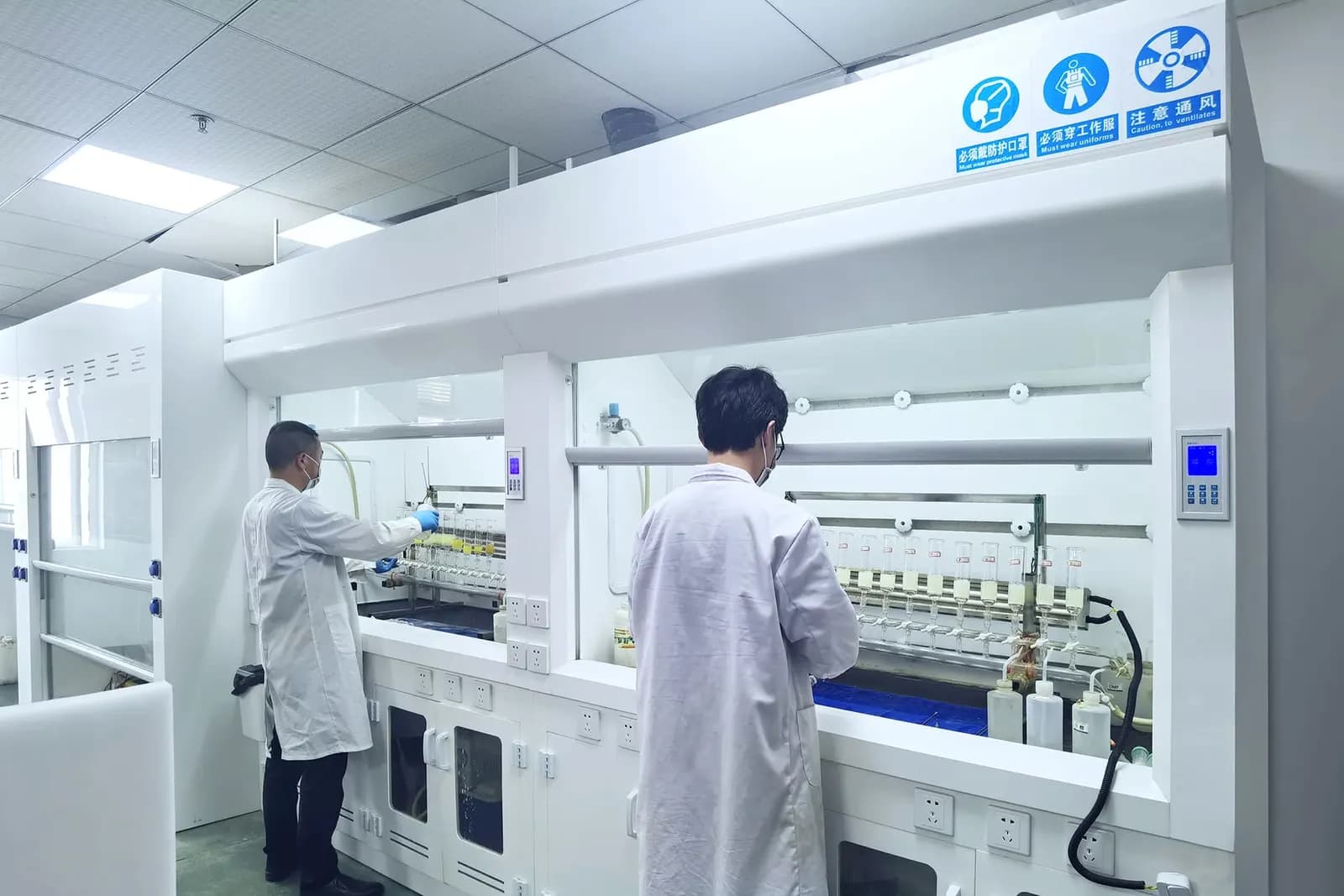
Peptide “identity” is several measurements that get collapsed into one word on a purchase order. HPLC says how much of the UV-active material is the main peak. Mass spectrometry says whether that peak has the expected molecular weight. NMR says something about structure and, sometimes, leftover small molecules. MALDI-TOF is another way to get a mass, useful when electrospray is unkind. None of these methods is a synonym for the others.
ChinaPeptides routine release for custom lots is HPLC plus mass confirmation, described under quality control. When a research protocol needs NMR, MALDI-TOF, high-resolution MS or a second laboratory’s method, we treat that as a specified analytical project. Our laboratory partner Qorix in Tianjin publishes LC-MS, NMR, MALDI-TOF and peptide-analysis services. Use that laboratory when the method is in their stated scope; confirm the exact test on their offerings page before you ship the only aliquot.
Start with the question, not the instrument name
Write the decision the data must support:
- “Is the main HPLC peak the requested mass, including the dye / PEG / disulfide?” → LC-MS or MALDI-TOF on that peak or on the bulk solid.
- “What fraction of the UV signal is the main peak?” → HPLC, with a stated method. See HPLC for peptide purity.
- “Is this the structure I drew, or an aspartimide / deletion / wrong staple?” → MS first; NMR if mass is ambiguous or a small-molecule impurity matters.
- “Does the peptide electrospray as a mess of adducts?” → MALDI-TOF is often the next mass method, not a louder ESI voltage.
Ordering “full characterization” without that sentence produces a stack of files and no decision. The same discipline applies to custom peptide synthesis quotations: name the assay, then the analytics.
LC-MS: mass on a chromatographic timeline
LC-MS pairs a liquid chromatograph with a mass spectrometer. You see when a species elutes and what m/z it carries. For research peptides it is the usual way to confirm that the main UV peak is the expected molecule, including common modifications. Multiply charged envelopes are normal in electrospray; deconvolution is part of reading the file, not a defect. The longer note is LC-MS analysis in peptide characterization.
LC-MS is a weak purity number if you only integrate the MS trace and call it HPLC percent. UV and MS do not weigh impurities the same way. A report should say which detector defined “purity.” High-resolution MS (HRMS), when offered, tightens the formula match; it still does not replace a chromatogram.
MALDI-TOF: a soft mass when ESI is awkward
MALDI-TOF ionizes from a solid matrix with a laser and measures time of flight. It is widely used for peptides and other biomolecules when a clean molecular ion is the goal. It can be kinder to some large or hydrophobic sequences than electrospray. It is not a substitute for HPLC area percent. A single MALDI mass that matches theory means “a species of that mass is there,” not “the vial is 98% that species.”
Qorix lists MALDI-TOF and MALDI-TOF/Q-TOF among its public capabilities. That is a reason to discuss MALDI with them when ESI spectra are noisy or when the peptide is large. It is not a reason to skip HPLC on a synthesis lot.
NMR: structure and small-molecule context
Nuclear magnetic resonance reports chemical environments. For a peptide it can support sequence/structure questions that mass alone cannot close, and it can show residual solvents or related small molecules that UV HPLC never named. NMR usually needs more material than a quick LC-MS shot. It is the wrong first test if you only wanted to confirm a catalog molecular weight.
We do not list NMR as routine ChinaPeptides peptide-release testing. If a publication or a partner QA group requires it, say so and plan quantity. Qorix publishes NMR as a spectroscopic offering. The spectrum’s value depends on the pulse program, solvent and whether the sample is the same solid as the HPLC vial.
A compact comparison
| Method | Primary question | Typical strength | Typical limit |
|---|---|---|---|
| HPLC (UV) | Area percent of the main peak | Comparable purity if the method is fixed | Does not prove mass or structure |
| LC-MS | Mass of eluting species | Assigns the main peak to a formula/mod set | Purity ≠ MS ion current |
| MALDI-TOF | Molecular weight | Often cleaner MW on difficult ESI samples | Not a purity method |
| NMR | Structure / small-molecule context | Orthogonal to MS | More sample; not a UV purity |
Peptide-specific complications
Disulfides, dyes, lipids and PEG change both chromatography and ionization. A Cy5 peptide can dominate UV at a wavelength where the unlabeled impurity is quiet. A PEGylated lot can look “impure” on HPLC because the PEG envelope is wide. A cyclic peptide can show a mass that matches a dimer if the high-mass range was not inspected. Those issues are chemistry, not a reason to distrust every third-party file. They are a reason to tell the testing lab what you attached to the chain.
Fluorescent and biotinylated analogues should travel with the parent sequence and the expected mass list. See peptide modification and fluorescent peptides when the label is the variable.
Manufacturer method versus send-out method
If you already have a ChinaPeptides chromatogram, send it with the independent request. Asking Qorix—or any lab—to “just confirm 95%” without a method produces a new number that cannot be compared. Independent testing is most useful when the second lab either repeats a close method or states clearly that it used a different one.
GC-MS and general small-molecule panels appear on some analytical menus, including Qorix’s broader offerings. They are relevant when residual solvents or a non-peptide impurity is the question. They are not default peptide-release tests on a milligram custom order. We will not invent them as ChinaPeptides routine items.
Filing the results
Keep the manufacturer CoA, the independent report and the sample history in one folder. The decision record is “these two methods, this aliquot, this date,” not a screenshot of a single peak. How to read a peptide CoA and independent peptide analytical testing are the two reading guides that belong together.
All of this remains research documentation. A prettier spectrum does not authorize human use.
Frequently asked questions
Is MALDI better than LC-MS for peptides?
Neither is universally better. LC-MS ties mass to a chromatographic peak. MALDI often gives a straightforward MW. Choose from the question and from how the peptide ionizes.
Does NMR replace HPLC purity?
No. NMR is not an HPLC area-percent method.
Can ChinaPeptides run NMR in-house on every peptide?
NMR is not described as routine release on this site. Independent laboratories such as Qorix publish NMR as a service. Ask before you assume a technique is included.
Why did LC-MS show several masses if HPLC looked clean?
Adducts, charge states, isotopes and minor co-eluting species are common. Ask for deconvolution and a peak assignment, not a single m/z screenshot.
Should I send a solution or the lyophilized solid?
Prefer the dry lot that matches the CoA, unless the testing lab specifies a solvent. Solutions test handling as much as synthesis.
Is HRMS required for a research peptide?
Only if the protocol needs a tight formula match. Many research lots are released on unit-resolution MS plus HPLC. Do not order HRMS as decoration.
Where is Qorix located?
Qorix describes itself as based in Tianjin, China. Contact and sample-shipping instructions are on qorixbio.com.
Does a third-party spectrum mean ChinaPeptides skipped QC?
No. Manufacturer HPLC and MS remain the release path. Third-party work is additional when the research use requires it.