By ChinaPeptides Technical Team · Published July 29, 2026 · 6 min read
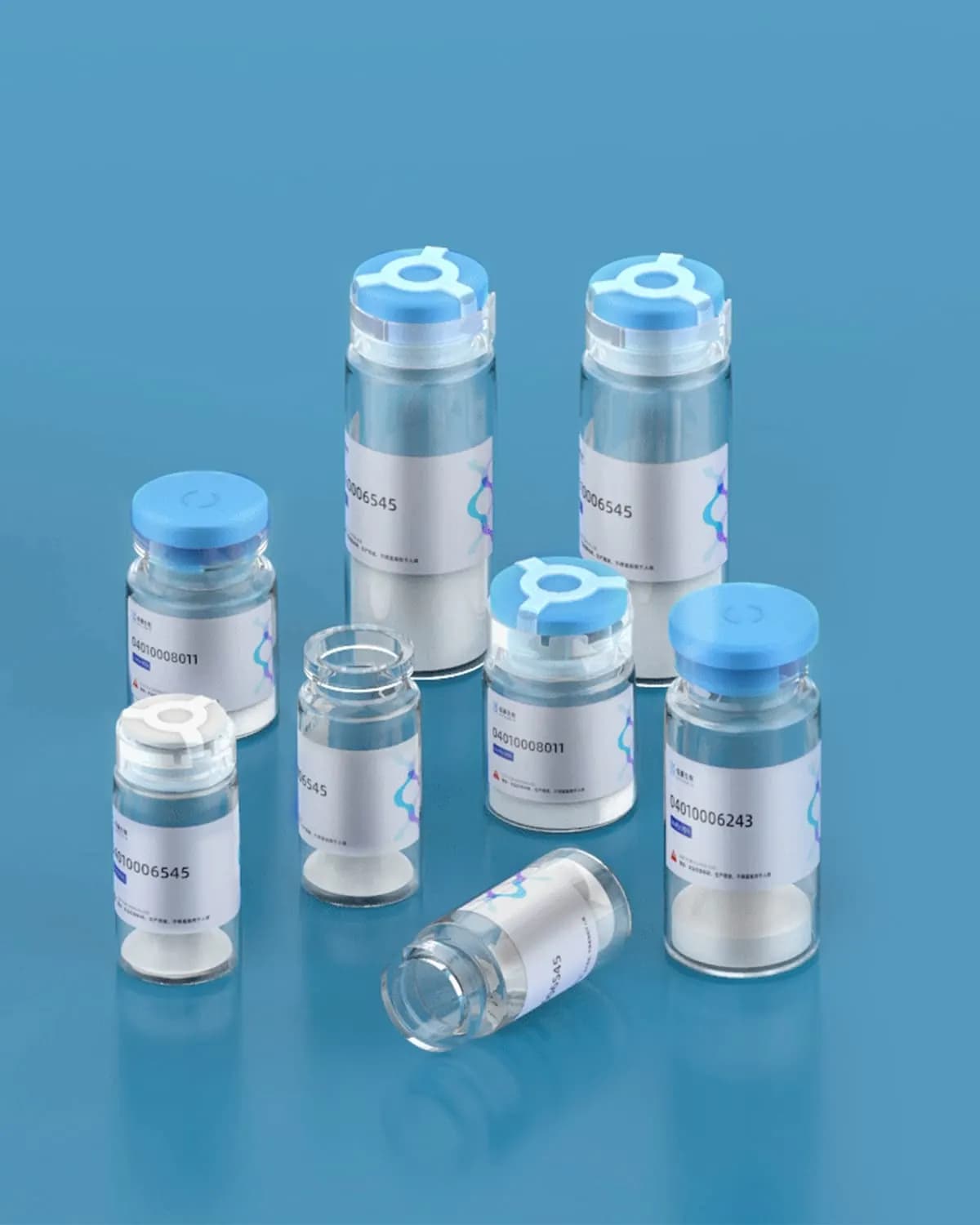
Unnatural amino acids are residues that are not among the twenty canonical proteinogenic L-amino acids, or that carry a non-native side-chain functional group. In research peptide chemistry they are tools: D-residues to probe chirality and slow some proteases in vitro, N-methyl residues to restrict backbone hydrogen bonding, α-aminoisobutyric acid (Aib) to stabilize helices, norleucine to replace methionine without the sulfur, and azide- or alkyne-bearing residues to support click chemistry. They are not decorations, and they are not interchangeable with the one-letter code of the closest natural residue.
ChinaPeptides incorporates these monomers into custom peptide synthesis when a suitable protected building block exists and survives the planned route. This article groups common classes by the property they change, then covers coupling, protection conflicts, and how the residue should appear on a certificate. Modification of a natural side chain after assembly (biotin, PEG, a dye) is a different chapter under peptide modification.
Classes that change different properties
Stereochemical analogs (D-Ala, D-Phe, and full D-peptides) invert side-chain presentation. A single D-residue in an L-chain is a kink, not a silent swap. An all-D peptide is a different molecule from the L-enantiomer; antibodies and enzymes that recognize one will often ignore the other. Write D- or the lowercase one-letter convention consistently and say which you used.
Backbone-modified residues include N-methyl amino acids and peptoid-like N-alkyl glycines. N-methylation removes a backbone NH, which can reduce aggregation in some sequences and can block a hydrogen bond the target required. Coupling onto an N-methyl amine is slow. Peptoid monomers have their own submonomer routes and should not be ordered as if they were ordinary Fmoc-amino acids unless that chemistry was agreed.
α,α-Disubstituted residues such as Aib strongly restrict φ/ψ space and are used to enforce helical character in research staples and model helices. They also couple poorly and racemize by a different pathway than mono-substituted amino acids. Plan extra activation effort at those positions.
Side-chain analogs include norleucine (Met without sulfur), ornithine and diaminobutyric acid (shorter lysine-like amines), citrulline, phosphoserine mimics, and halogenated phenylalanines. Click handles (Fmoc-azidolysine, propargylglycine, and related) install a selective reaction site for later labeling. Each has a mass increment and a protection scheme that must be named.
Coupling kinetics and why “just couple longer” fails
Hindered residues need more reactive activation, double coupling, or elevated temperature, with the usual aspartimide and racemization caveats from Fmoc versus Boc chemistry. N-methyl residues are poor nucleophiles; the incoming residue after an N-methyl amino acid is a frequent deletion. Aib–Aib junctions are historically stubborn. If your sequence has a run of hindered residues, flag it as a difficult peptide in the inquiry rather than discovering a ladder of deletions on the crude MS.
Equimolar mixture libraries that include unnatural residues will not be equimolar if those residues couple slowly. Discrete wells are the honest format for SAR that depends on a rare monomer. See peptide library design for that limit.
| Residue class | Typical research reason | Synthesis caution |
|---|---|---|
| D-amino acids | Chirality, protease resistance in vitro | Do not mix D/L codes; stereodescriptor on the CoA |
| N-methyl amino acids | Backbone H-bond removal, permeability research | Slow acylation of the N-methyl amine |
| Aib / α,α-disubstituted | Helical constraint | Hindered coupling; special activation |
| Nle, Orn, Dab, Cit | Isosteres and charge edits | Protection of extra amines; mass increment |
| Azide / alkyne AAs | Click labeling or cyclization | Azide stability in SPPS and cleavage |
| Phospho and glycosyl AAs | PTM mimics | Building-block availability; extra deprotection |
Protecting-group conflicts
An extra amine (Orn, Dab, Dap) needs a protecting group orthogonal to Fmoc if it must stay blocked until the end, or selectively removable if it is a lactam or label site. Alloc, ivDde, Mtt, and Boc-on-the-side-chain are common tools; they are not interchangeable with every cleavage cocktail. An azide must survive piperidine and TFA well enough to remain for click chemistry. Some azides reduce or rearrange if the cleavage is careless. State whether the azide should remain in the delivered peptide or be consumed in a manufacturer-run click step.
Phosphorylated residues may β-eliminate under base. Some Fmoc-phosphoamino acids are used with shortened deprotections or as protected phosphates that are unmasked later. If the paper you follow used a specific building block, name it. “Phospho-Ser” is not a complete specification.
Documentation and residue codes
Certificates should list non-canonical residues in a readable form: D-Phe, Nle, Aib, N-Me-Ala, Lys(N3), not a private one-letter invention. The expected mass must include those increments. If two residues are isobaric (for example some halogenated analogs versus a deletion plus adduct), MS alone may not distinguish them; the sequence as submitted plus the building-block lot is the identity chain.
Do not invent a three-letter code on the order and assume the chemist shares it. Attach a structure for anything beyond widely used abbreviations. That single attachment prevents a wrong monomer from being coupled for two weeks.
Design advice that stays scientific
Replace one variable at a time when you are learning a motif. An analog that is D, N-methyl, and PEGylated cannot teach you which change did the work. Match the analog to the hypothesis: oxidation → Nle; helix → Aib or a stapled peptide design; later dye → azide/alkyne rather than extra lysine if lysines are already in the motif.
Stable-isotope residues (13C/15N amino acids, deuterated side chains) are unnatural in the analytical sense even when the side-chain structure is native. They are specified by the labeled atom and the expected mass shift, and they need a labeling incorporation statement if the peptide is a quantification standard. Incomplete incorporation is an impurity envelope, not a curiosity. Treat isotope orders as a documentation project as much as a coupling project.
Unnatural residues remain research substitutions. They do not create a drug substance and they do not imply human use.
Frequently asked questions
Can every unnatural amino acid be used in Fmoc SPPS?
Only if a protected monomer exists and is stable to the cycle and cleavage. Some residues are solution-phase or enzymatic introductions. The quote should say whether the monomer is available.
How do I write a D-residue in a sequence string?
Use an explicit prefix (D-Ala or dA) and define the convention in the same email. Do not rely on lowercase letters alone if the rest of the file is inconsistent.
Why is an N-methyl peptide more expensive?
The monomers cost more and the couplings fail more often, which lowers isolated yield. You are paying for risk and for scarce building blocks, not for a vanity label.
Is norleucine identical to methionine in binding assays?
It is a common isostere for the linear carbon chain without sulfur. It is not identical if the sulfur participates in binding or redox chemistry. Test the analog; do not assume silence.
Can I click-label an azide peptide myself?
Yes if you can remove copper (for CuAAC) or if you use a strain-promoted reagent, and if you can purify. Manufacturer-run click is appropriate when you want the labeled mass on the CoA.
Do unnatural residues change HPLC purity interpretation?
They can change chromophore and retention. Diastereomers from a racemized unnatural residue may appear as a shoulder. Ask for a method that can see that shoulder if stereochemistry is the point of the analog.
Should I specify ≥98% for a hindered unnatural peptide?
Specify the purity the assay needs and allow a technical reply if that grade is unrealistic. A characterized ≥95% of the correct analog is more useful than an unmeetable 98% promise. See the purity guide.