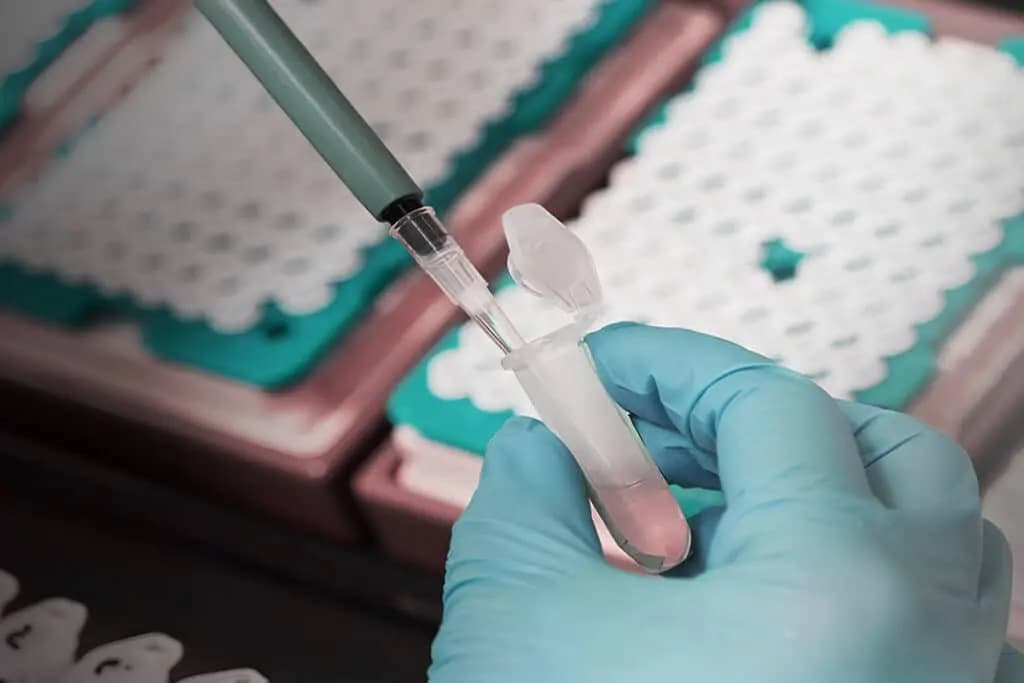
Monoclonal antibody projects begin with antigen review and immunization strategy. Hybridoma screening is performed against the specified peptide or protein antigen.
A monoclonal program is chosen when you need a renewable antibody with a defined specificity for a research assay. Screening criteria should include the format of the final test—ELISA, blot or other—so that clones are not selected only on a convenient plate assay.
Research-grade monoclonal antibodies can be purified and supplied with project documentation. Therapeutic development is outside this service description.
Peptide antigens for monoclonal work should be designed with the screen in mind. A cysteine-conjugated KLH immunogen and a biotinylated screening peptide are a typical pair. See antigen design if the epitope is still open.
Clone numbers, isotypes and supernatant volumes are project outputs, not catalog SKUs. We will not list a fictional clone library on this site.
When monoclonal is the better format
Choose monoclonal work when a later experiment needs the same binding site again, or when polyclonal background is too high for the assay. Do not choose it only because the word sounds more “specific.” A poorly screened monoclonal can be worse than a well-absorbed polyclonal.
Screening discipline
State whether clones must work on denatured protein, native protein, peptide ELISA or another format. A clone selected only on peptide ELISA may fail on a blot of the full-length protein. That is a design issue, not a surprise that should appear at the end of the project.